Revision
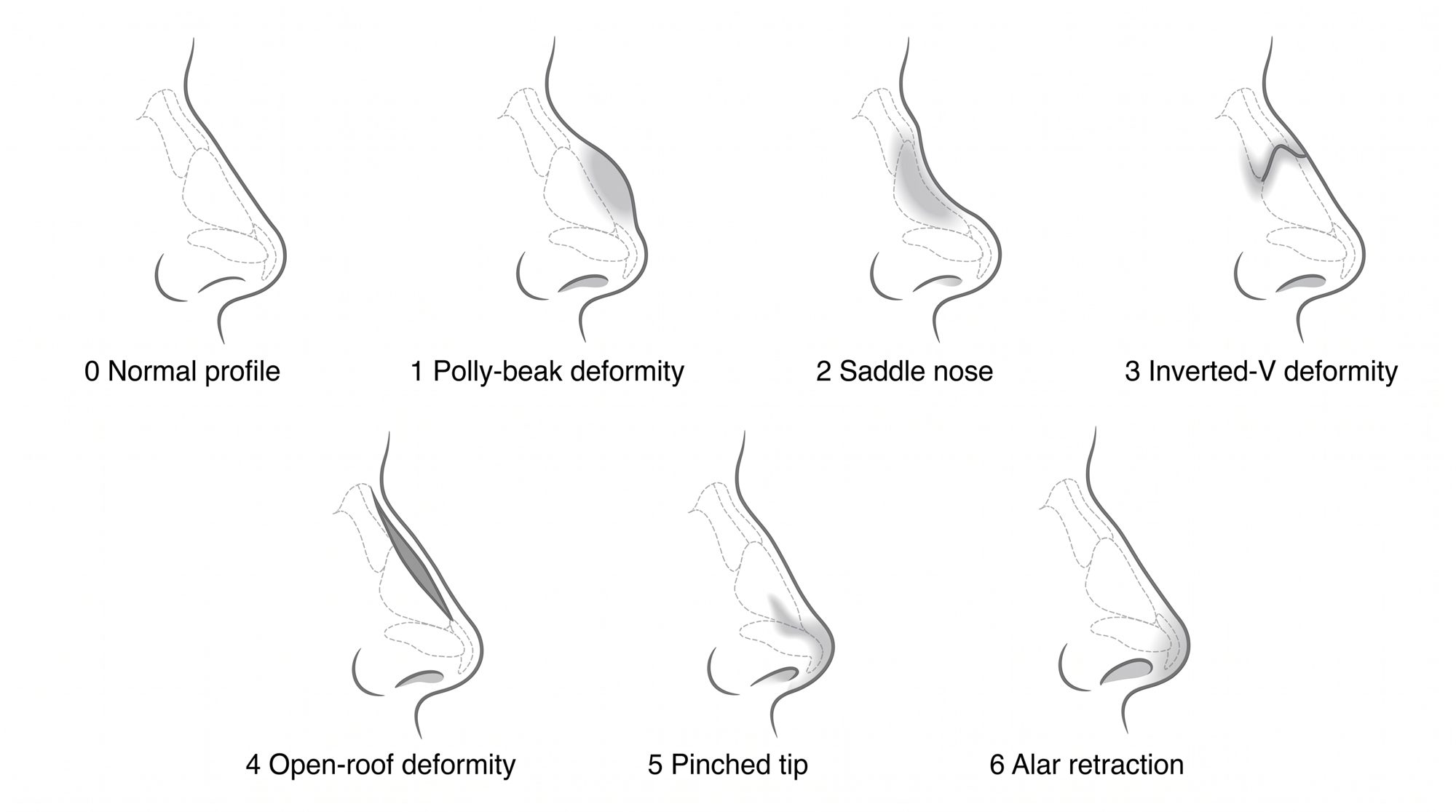
Two-sentence lead. Secondary rhinoplasty corrects deformities left by a previous rhinoplasty: displaced or distorted structures, under-resection, or over-resection. In Guyuron's series of 100 consecutive revision patients the leading complaint was airway obstruction (65%), and the surgeon found more deformities than the patient reported.
The evidence, in the authors' words
- Definition (Cochran & Gunter 2010): "Postoperative rhinoplasty deformities—such as displacement or distortion of anatomic structures, inadequate surgery resulting in under-resection of the nasal framework, or over-resection caused by overzealous surgery—require a secondary rhinoplasty. Success in secondary rhinoplasty, therefore, relies on an accurate clinical diagnosis and analysis of the nasal deformities, a thorough operative plan to address each abnormality, and a meticulous surgical technique. Septal cartilage is the grafting material of choice for rhinoplasty; however, auricular cartilage and rib cartilage are used in secondary rhinoplasty."
- What revision patients present with (Lee, Zwiebel, Guyuron 2013, n = 100, mean age 39.2, all operated elsewhere): complaints — airway occlusion 65%, dorsum asymmetry 33%, nostril asymmetry 18%, tip asymmetry 14%. Surgeon's findings — dorsal asymmetry 65%, wide dorsum 47%, nostril asymmetry 41%, wide alar base 38%, dorsal hump 30%; "The senior author saw significantly more nasal deformities than the patients themselves". Maneuvers — septoplasty 71%, alar rim graft 67%, dorsal graft 63%, osteotomy 60%, dorsal hump removal 46%. "The high incidence of airway concerns among secondary rhinoplasty patients is alarming and emphasizes the urgent need to pay attention to the airway during primary rhinoplasty."
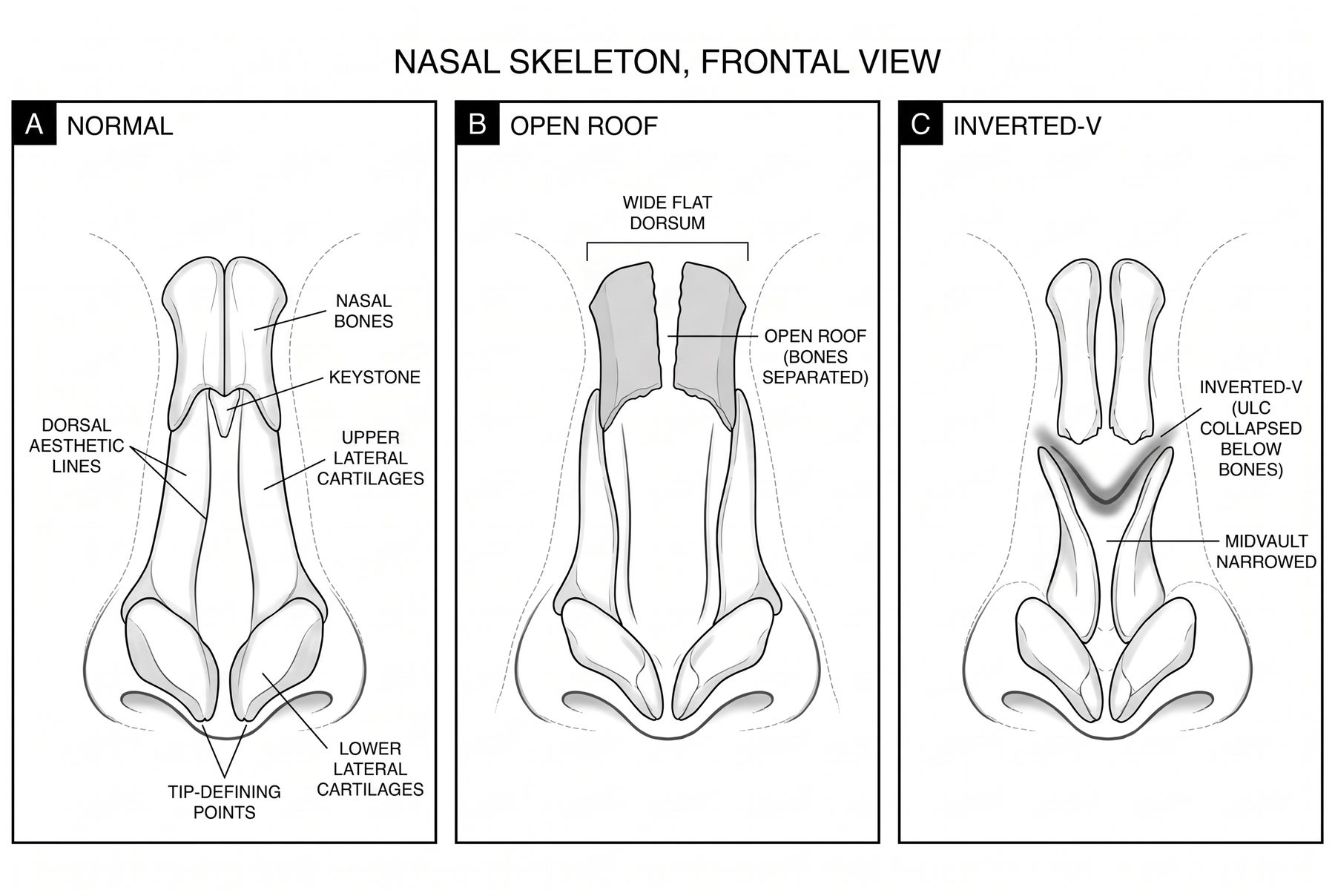
- Sequelae of hump reduction (Rohrich 2004): "long-term dorsal irregularities caused by uneven resection or overresection or underresection…; the inverted-V deformity; and excessive narrowing of the midvault."
- Revision rates in a 1,191-case dorsal-preservation series (Saban 2026): 3.4% → 9.9% (over-extended indications) → 3.3% after a unified framework.
- The approach: the external approach was introduced for secondary cases first (Gunter & Rohrich 1987). Sheen's "Secondary rhinoplasty" (PRS 1975) is the closed-approach counterpart.
Complication pages the hub links to (each page: definition, cause, fix, who publishes on it)
| Slug | Deformity | Cause in the literature | Typical correction |
|---|---|---|---|
| polly-beak | supratip fullness above a drooping tip | under-resected cartilaginous dorsum / dead space scar / loss of tip support | supratip reduction, tip support (strut/SEG), steroid injection early |
| inverted-v | visible ULC–bone step on frontal view | midvault collapse after hump removal without spreader grafts (Rohrich 2004) | spreader grafts / spreader flaps (Sheen 1984) |
| open-roof | flat wide dorsum after hump removal | no osteotomies to close the roof | lateral osteotomies, onlay |
| saddle-nose | dorsal collapse | over-resected septum / L-strut failure / cocaine, trauma | rib dorsal graft, L-strut reconstruction (Cochran & Gunter 2010) |
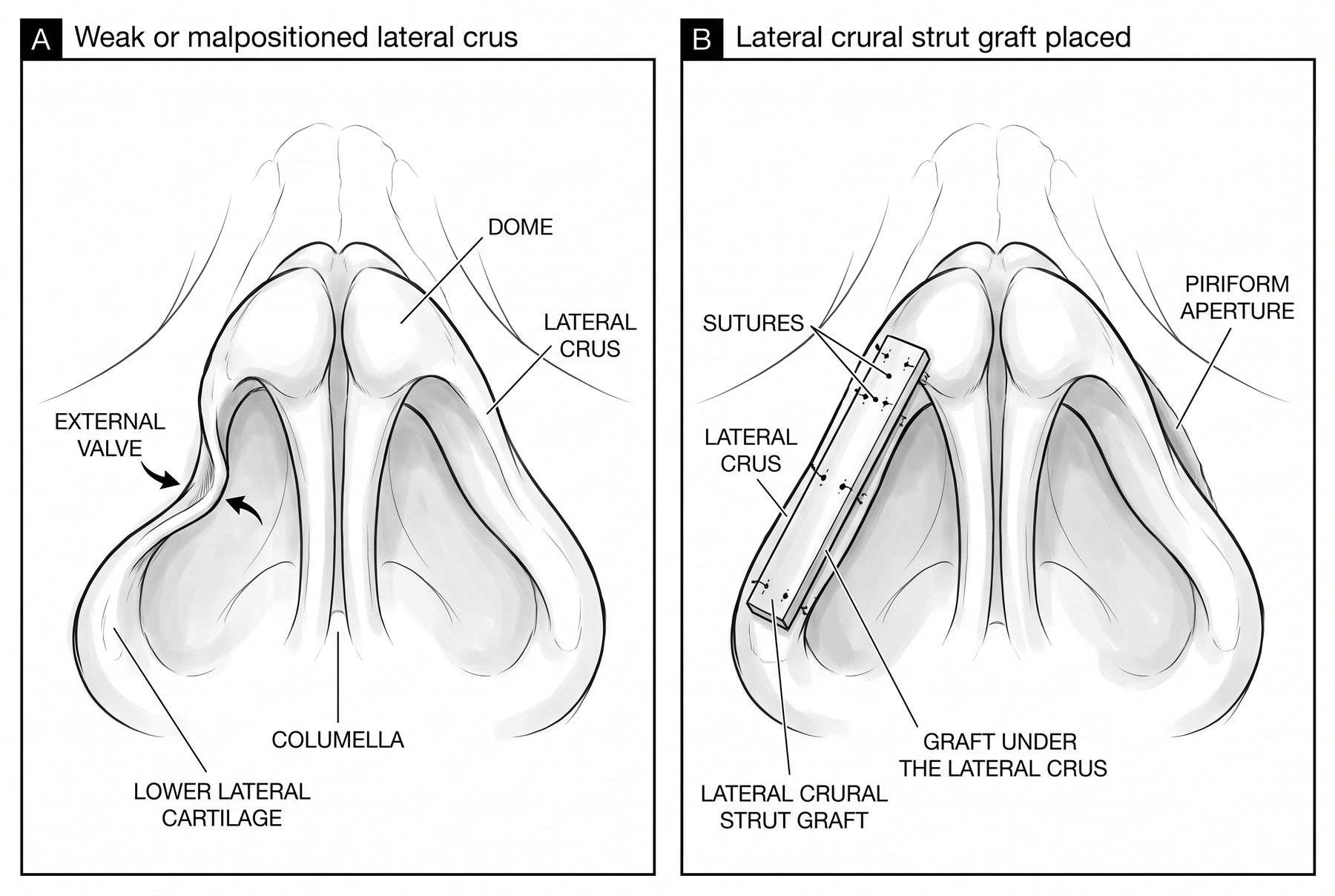
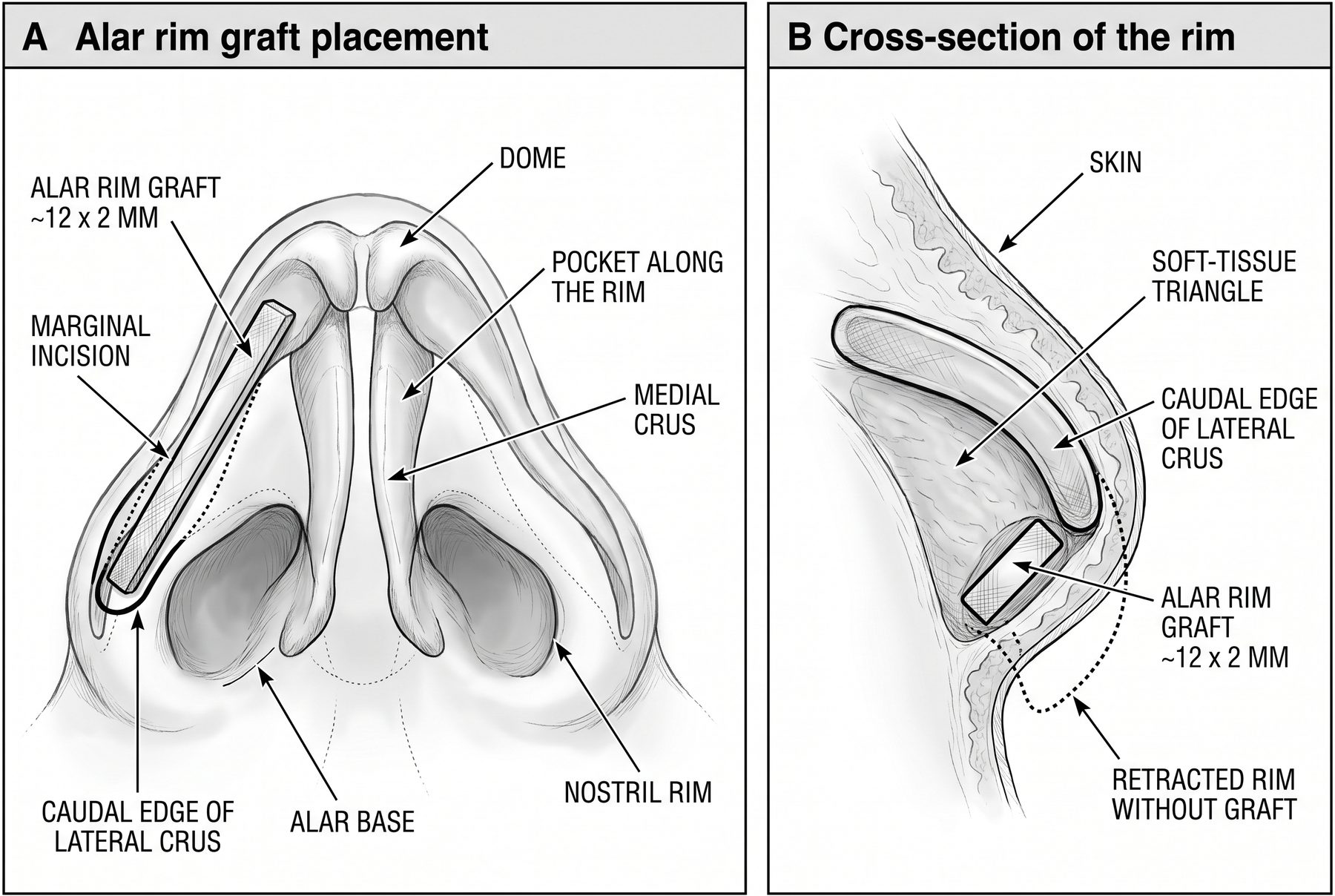
| pinched-tip | alar collapse, bossae | over-resected lateral crura | lateral crural strut grafts, alar rim grafts (67% in Guyuron series) |
| alar-retraction | notched nostril rim | over-resection / scar contracture | rim grafts, composite grafts |
| airway-obstruction | valve collapse, septal deviation | midvault narrowing, untreated septum (65% of revision complaints) | spreader grafts, septoplasty (71%), valve repair |
Surgeons on the site who publish on this
Guyuron (#4), Toriumi (#7, discussant), Cochran (#19), Gunter and Sheen (history), Saban (world).
Gaps
- A published overall revision rate for primary rhinoplasty (search: "revision rate" rhinoplasty systematic review).
- Polly-beak and alar retraction primary references (Rohrich; Toriumi; Guyuron).