Dorsal hump reduction
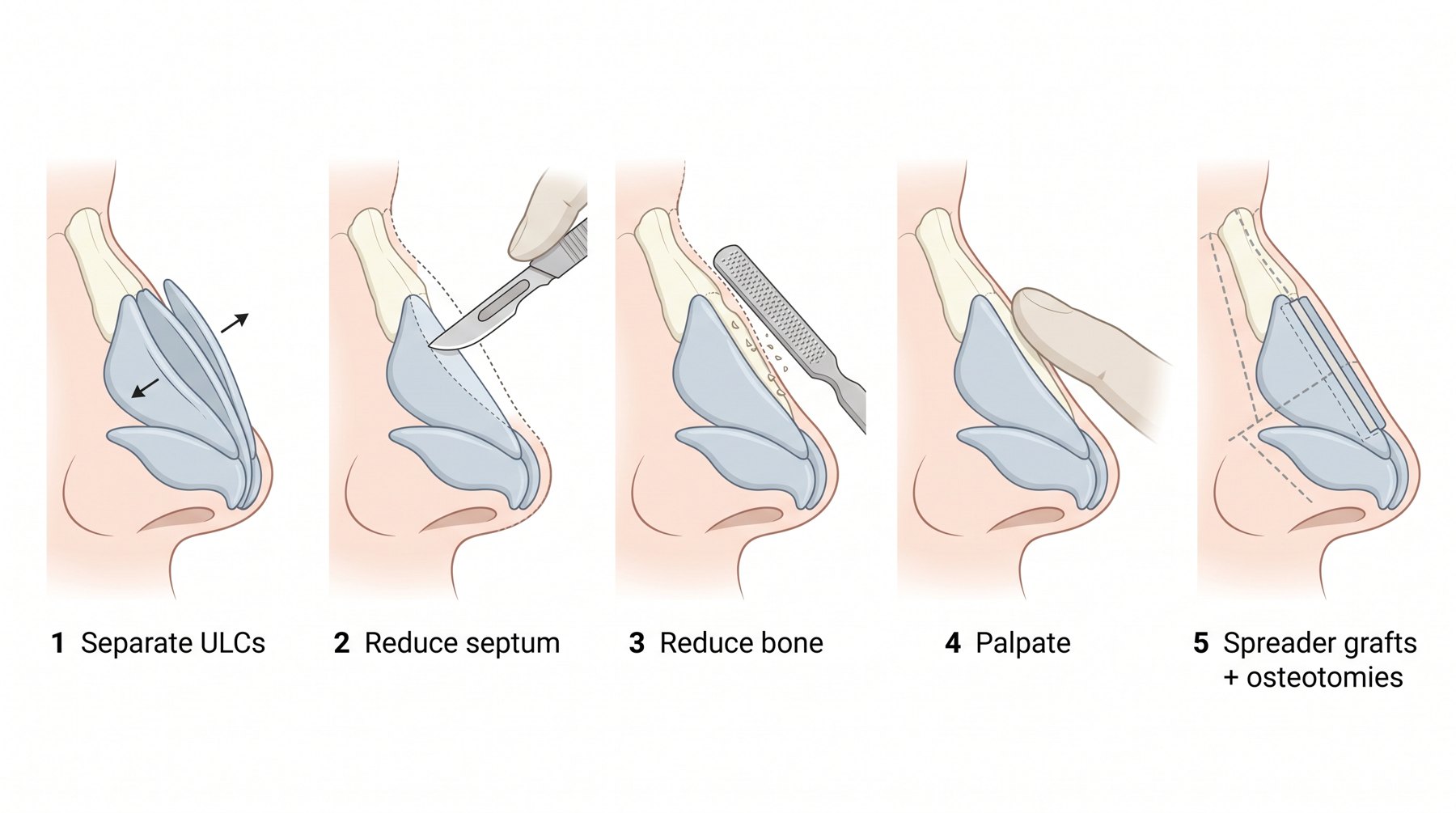
Two-sentence lead. A dorsal hump is the osseocartilaginous profile convexity formed by the nasal bones, the dorsal septum and the upper lateral cartilages. Component dorsal hump reduction takes it down in five graded steps so the upper lateral cartilages and the dorsal aesthetic lines are preserved, which reduces the need for spreader grafts and avoids the inverted-V deformity.
The technique, as published (abstract, verbatim)
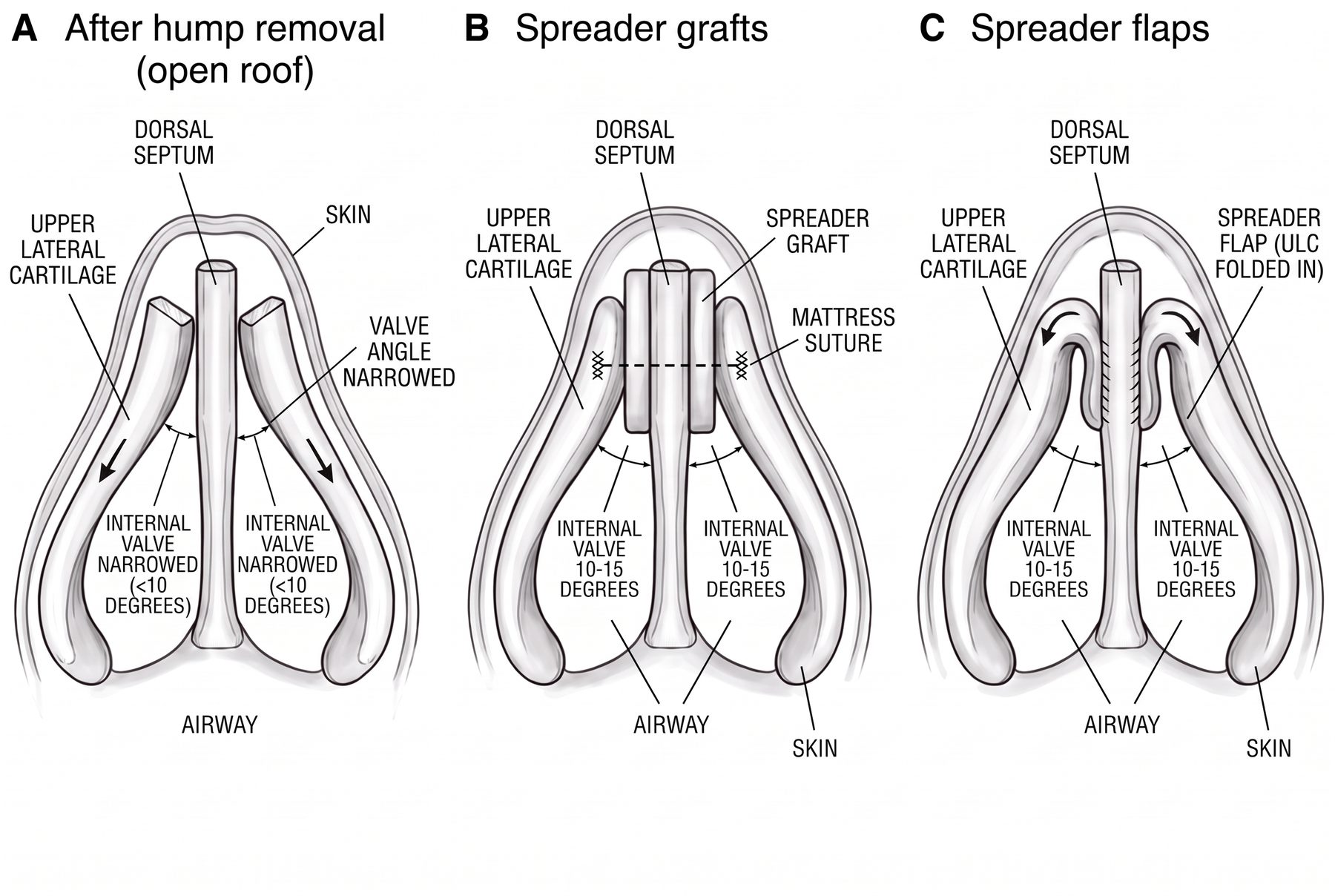
"Dorsal hump reduction can create both functional and aesthetic problems if performed incorrectly. Component dorsal hump reduction allows a graduated approach to the correction of the nasal dorsum by emphasizing the integrity of the upper lateral cartilages when performing dorsal reduction. Use of this approach can minimize the need for spreader grafts in primary rhinoplasty patients. Possible untoward sequelae of dorsal hump reduction include long-term dorsal irregularities caused by uneven resection or overresection or underresection of the osseocartilaginous hump irregularity; the inverted-V deformity; and excessive narrowing of the midvault. The component dorsal hump reduction technique is a five-step method: (1) separation of the upper lateral cartilages from the septum, (2) incremental reduction of the septum proper, (3) dorsal bony reduction, (4) verification by palpation, and (5) final modifications (spreader grafts, suturing techniques, osteotomies). A graduated approach is described that offers control and precision at each interval. Fundamental to the final outcome is the protection and formation of strong dorsal aesthetic lines that define the appearance of the dorsum on frontal view. Furthermore, preservation of the transverse portions of the upper lateral cartilages is essential to maintain patency of the internal nasal valve…" — Rohrich, Muzaffar, Janis, PRS 2004
Anatomy the page must carry (for the diagram)
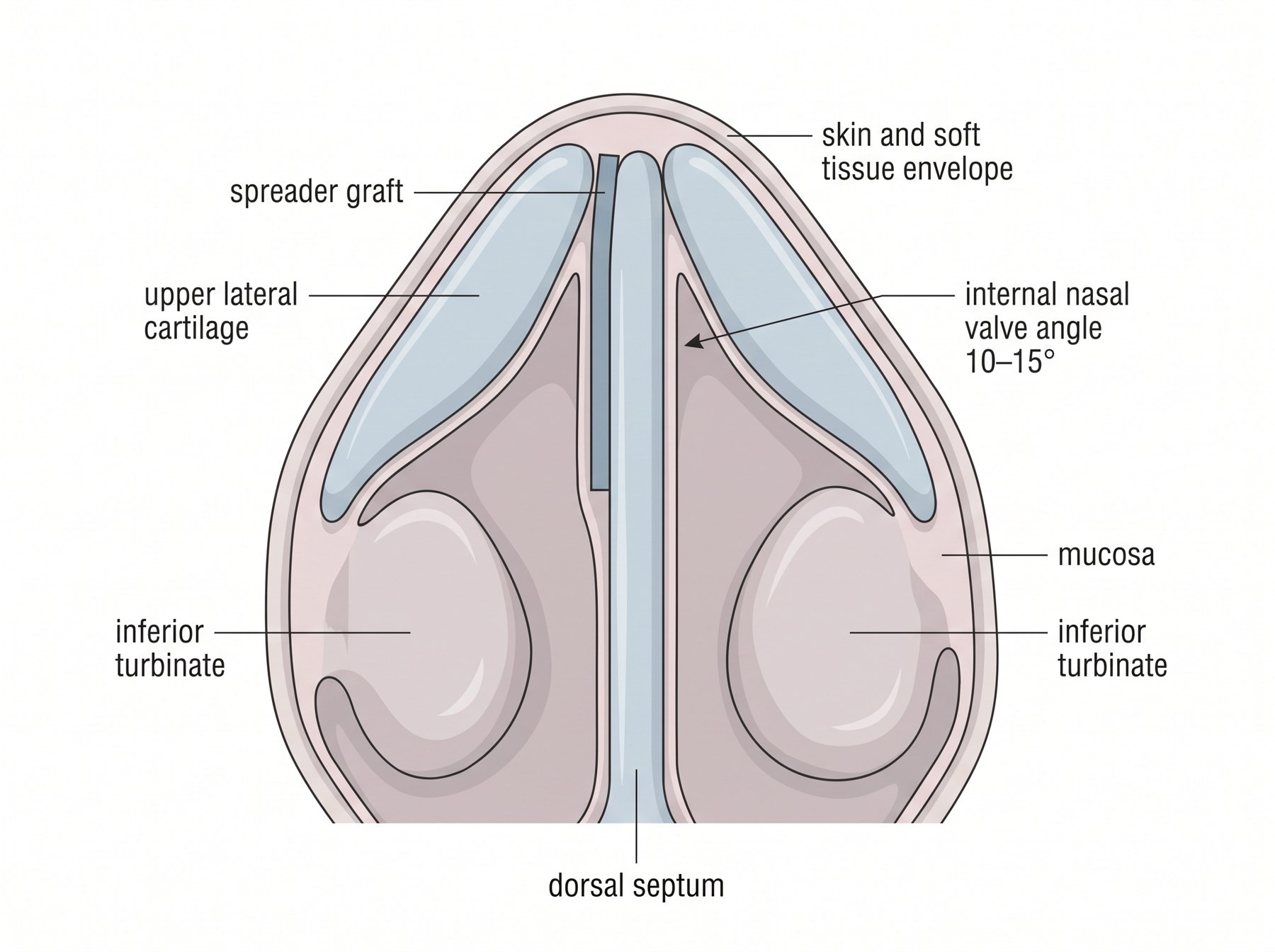
- Bony vault (nasal bones, frontal process of maxilla) → keystone area → cartilaginous vault (dorsal septum + paired upper lateral cartilages) → the internal nasal valve (angle between septum and ULC, 10–15°).
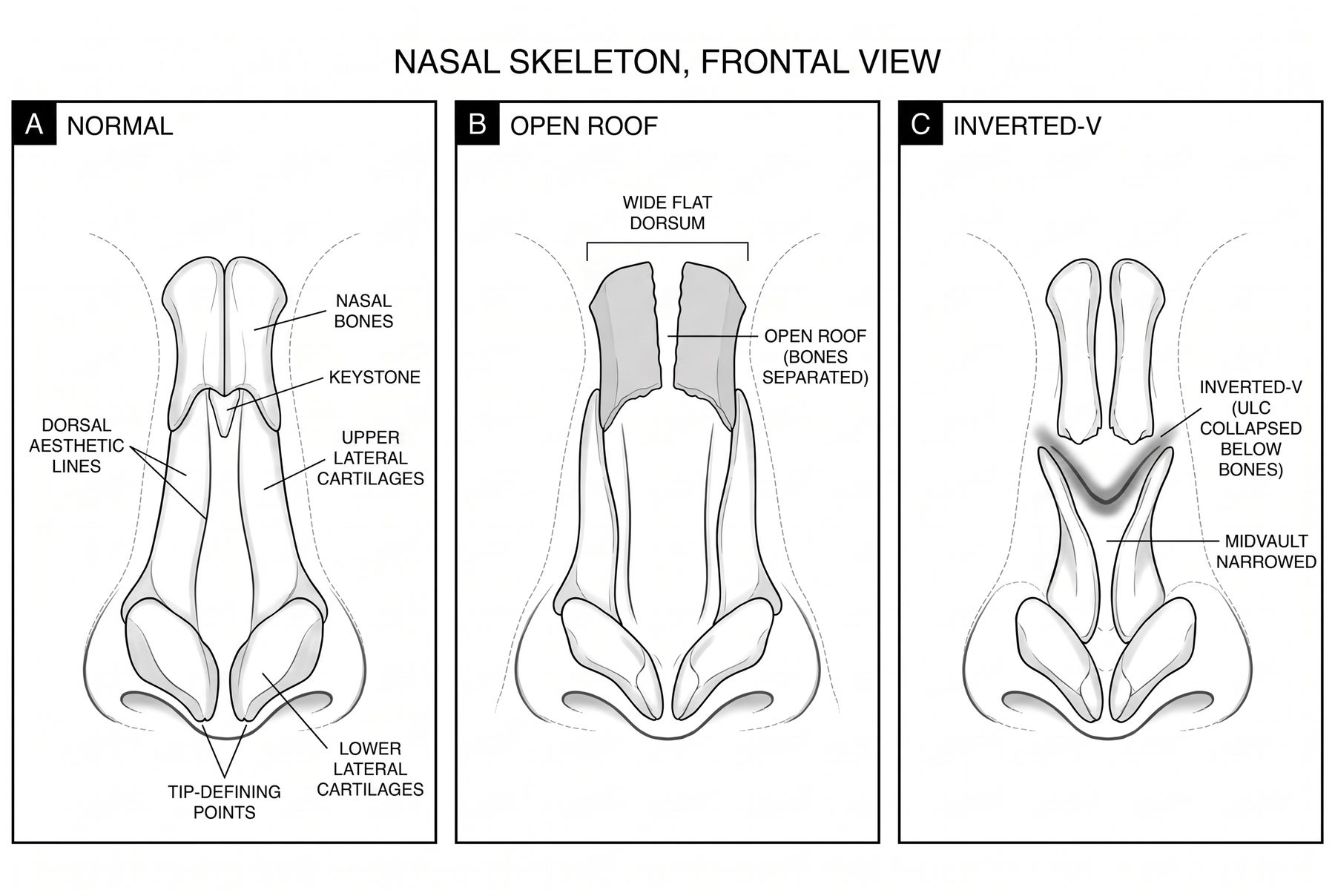
- The dorsal aesthetic lines: paired, slightly curved lines from the medial brow to the tip-defining points on frontal view; the reason a straight-edge "hump removal" fails on frontal view.
- Complications named in the abstract: dorsal irregularity, inverted-V deformity, midvault narrowing / valve collapse (the open-roof problem) — each links to /revision/[complication]/.
- Spreader grafts (Sheen 1984): septal cartilage strips between the dorsal septum and the ULC to reconstruct the middle vault roof after hump removal — the corrective the component technique tries to make unnecessary in primary cases.
Related technique pages
- /surgery/dorsal-preservation/ — the alternative that keeps the dorsum intact (push-down / let-down).
- /surgery/spreader-grafts/ — Sheen 1984.
- /revision/inverted-v/ · /revision/open-roof/ · /revision/polly-beak/.
Surgeons on the site who publish on this
Rohrich (author). Janis (co-author; ASPS president 2018). Others: to be filled from the journal archive.