Surgical anatomy of the nose
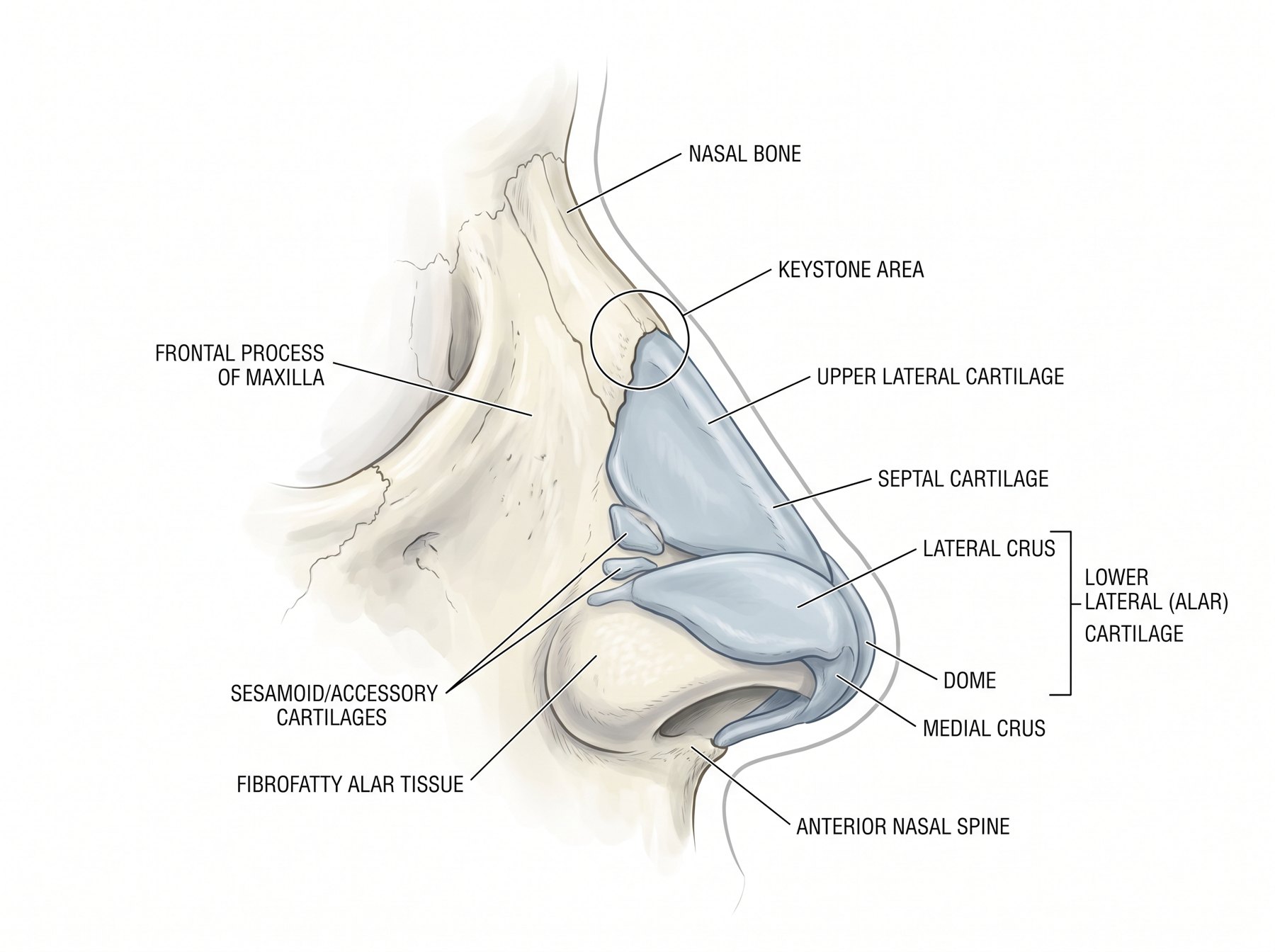
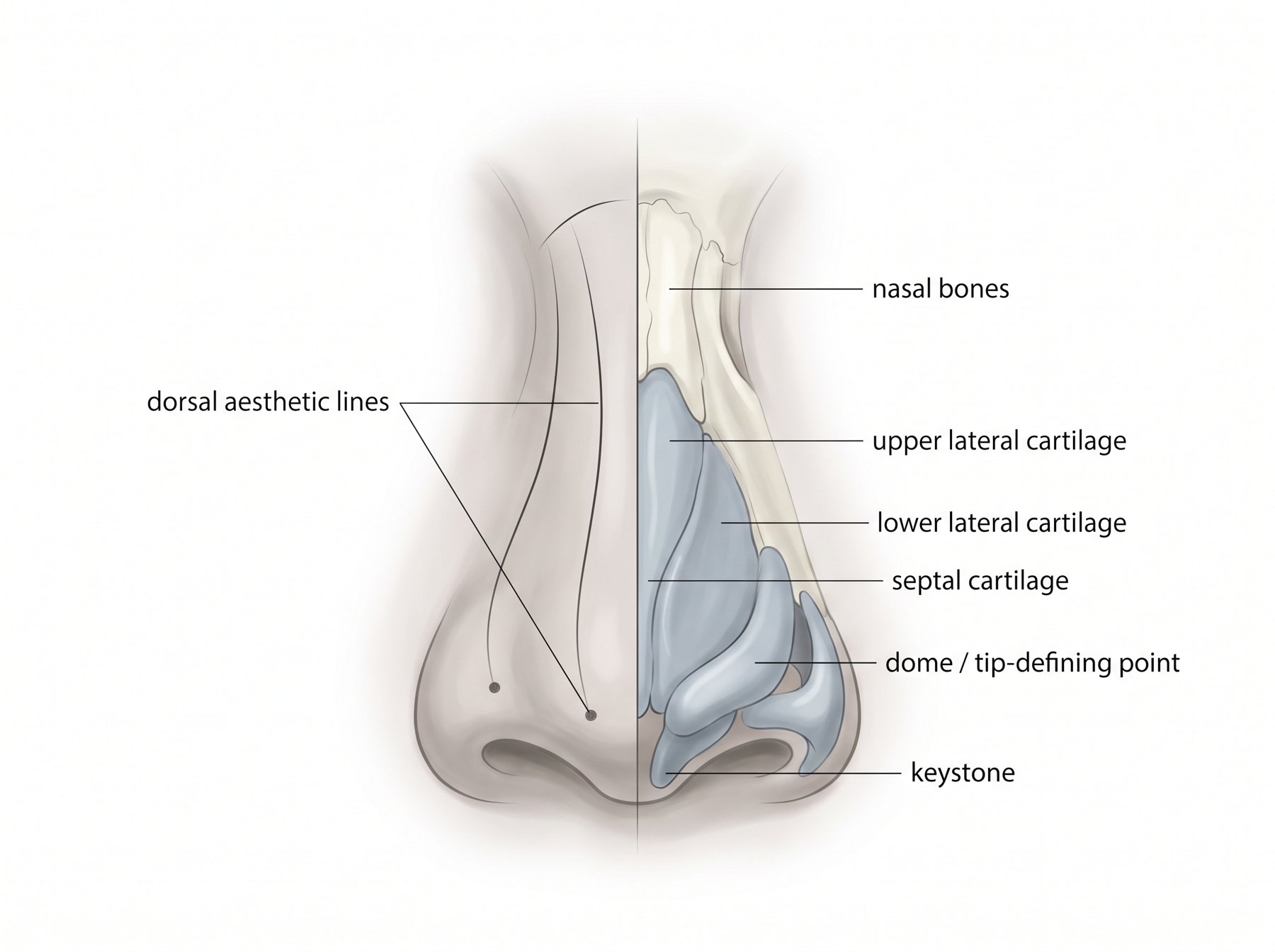
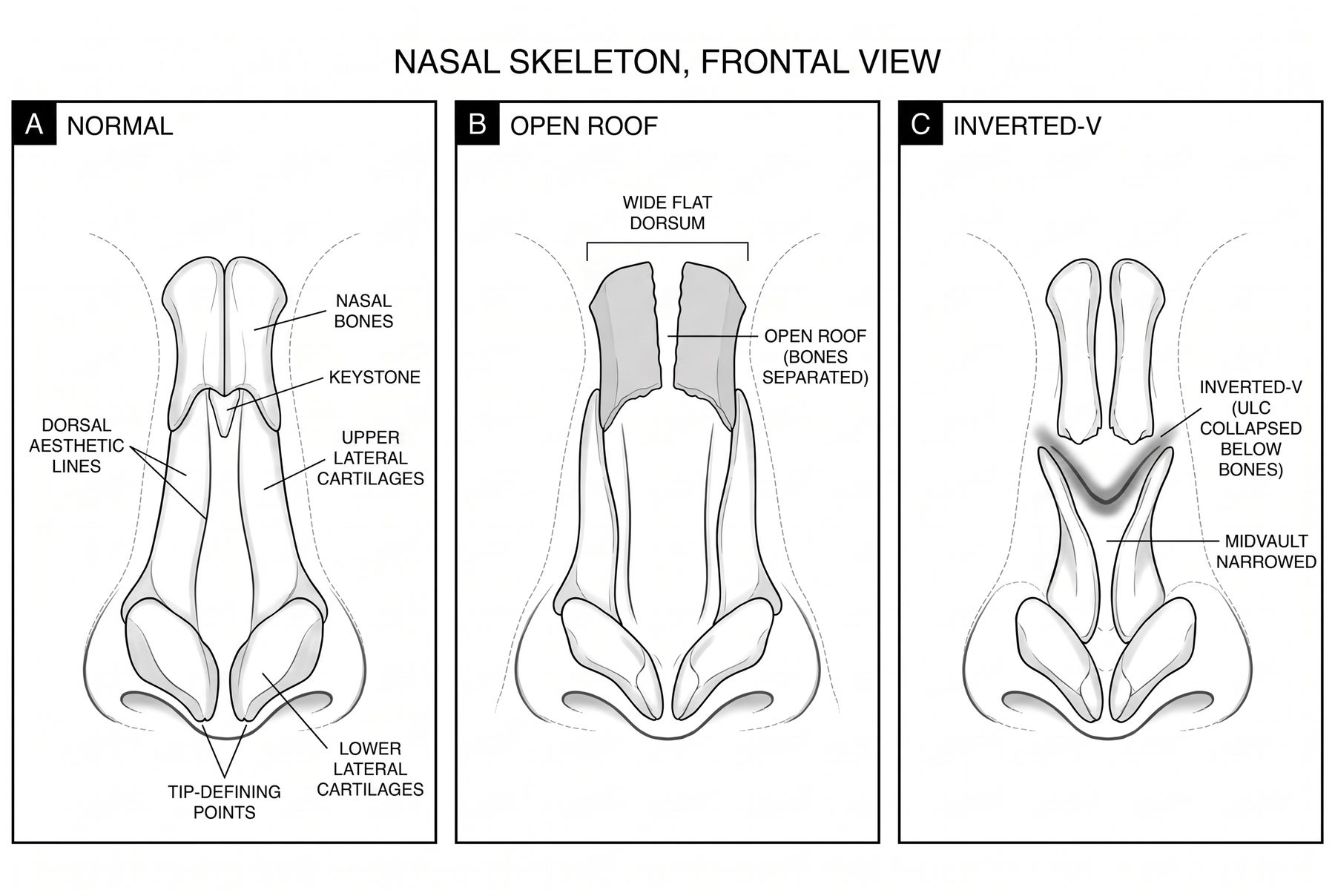
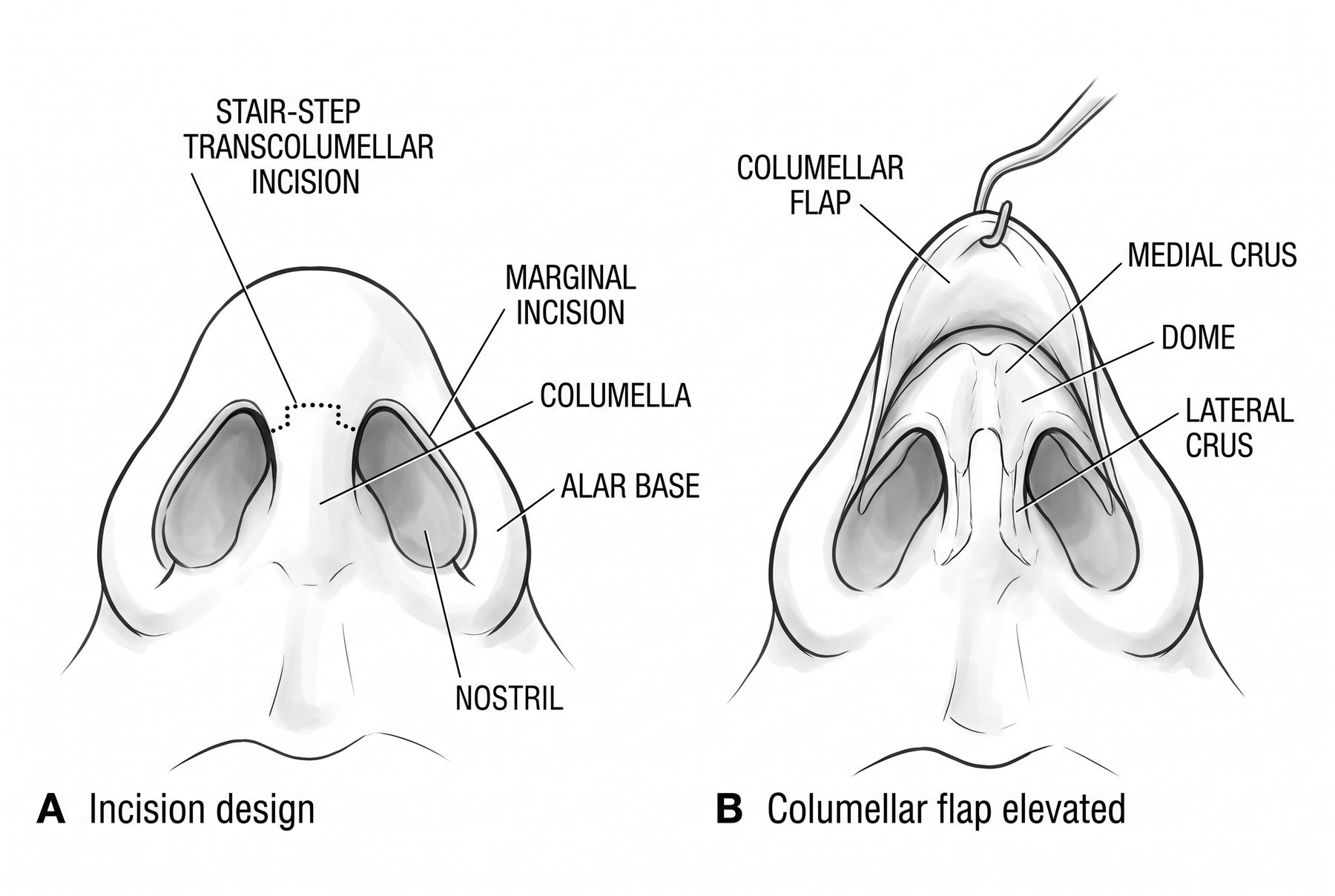
Two-sentence lead. The nose is three vaults on a septum: the bony vault of the paired nasal bones, the cartilaginous middle vault of the upper lateral cartilages, and the tip of the paired lower lateral (alar) cartilages. Every rhinoplasty manoeuvre changes one of these structures or the ligaments and skin envelope over them.
The structures, in StatPearls' words (Hohman, Fichman, Piedra Buena 2024)
| Structure | Quote |
|---|---|
| Bony vault | "The upper third of the nose, or 'bony vault,' is composed of the paired nasal bones medially" and the maxillary processes laterally. |
| Middle vault | The midvault contains the upper lateral cartilages. |
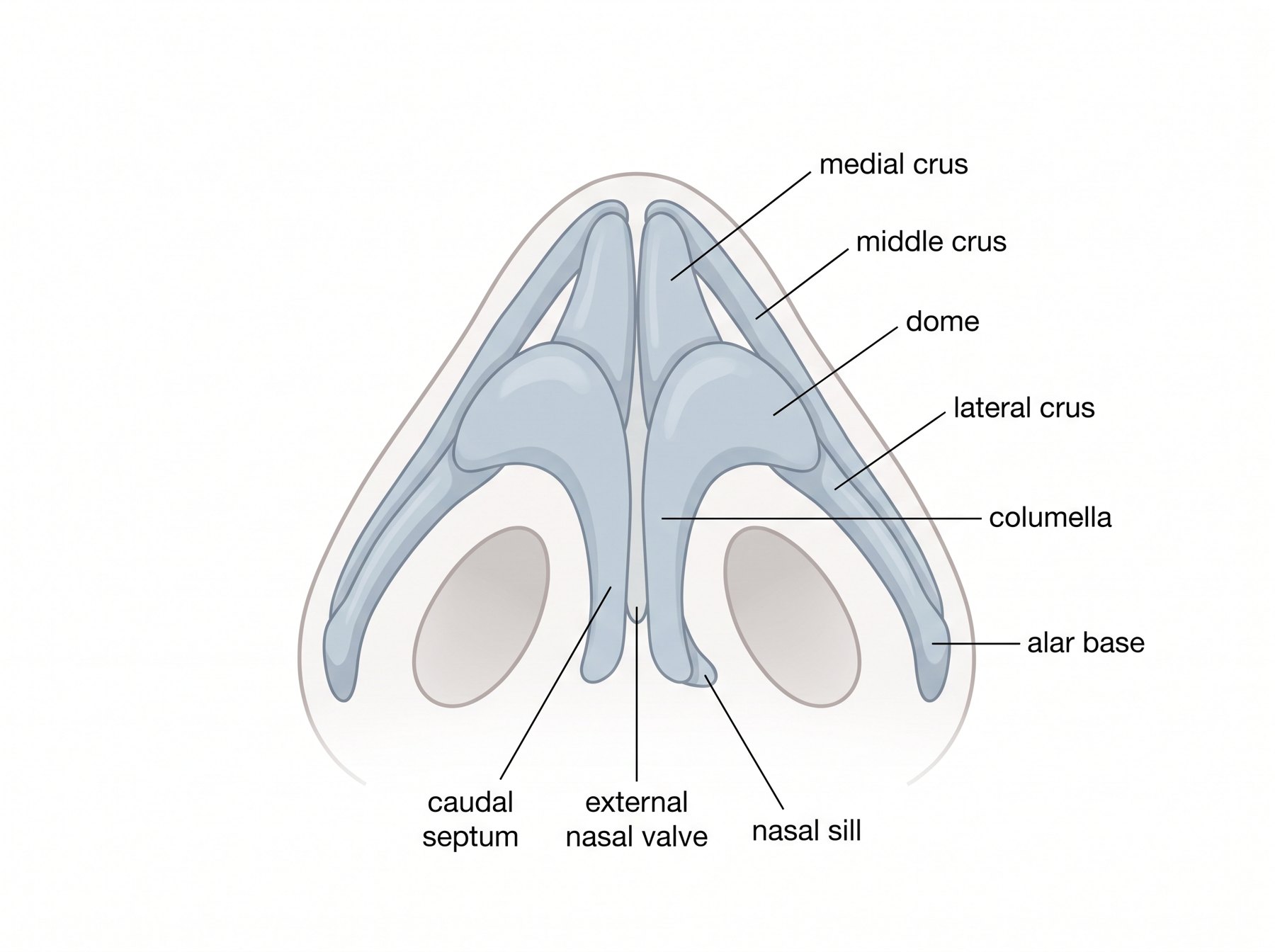
| Tip | "the 2 lower lateral, or alar, cartilages each consist of a lateral and a medial crus." |
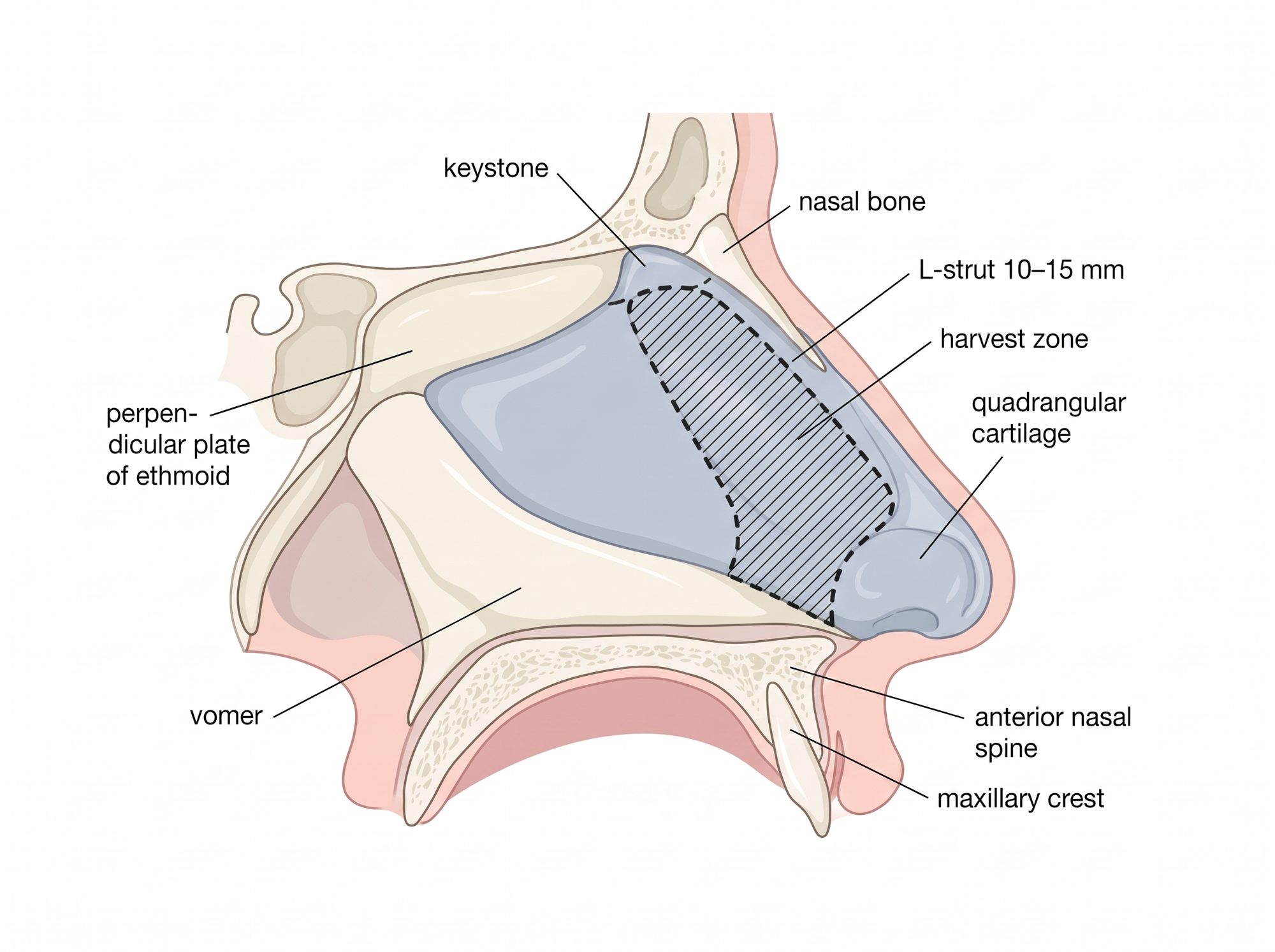
| Septum | "The nasal septum, a rigid structure covered by mucosa, is located in the midline of the nasal cavity, where it separates the left and right nasal passages." |
| Keystone | "the junction of the quadrangular cartilage and the perpendicular plate of the ethmoid bone" — "preservation during surgery is critical for the maintenance of support." |
| Internal nasal valve | formed where "the caudal margin of the upper lateral cartilage and the head of the inferior turbinate" meet the septum. |
| External nasal valve | "the regions bounded by the caudal margins of the lower lateral cartilages, the septum and columella, and the nasal sill." |
| Tip support | "The nasal tip has 3 major support mechanisms: the size/shape/resiliency of the lower lateral cartilages, the attachment…at the 'scroll' region, and the attachment…to the caudal septum." |
| L-strut | "it is important to leave an L-shaped strut of 10 to 15 mm in width along the dorsal and caudal margins of the quadrangular cartilage to provide adequate structural support." |
| Growth | "Surgery is usually performed when the nasal skeleton has developed completely" at "approximately 15 for females and 17 for males." |
Technique facts that hang on the anatomy (StatPearls, verbatim)
- Open approach: "The transcolumellar incision is marked using a stair-step or chevron shape ('inverted-V') to break up the contour of the scar." The "columellar flap is then elevated up to the domes of the lower lateral cartilages."
- Endonasal: "Access is usually obtained via an intercartilaginous incision, made through the scroll region, between the cephalic border of the lateral crus of the lower lateral cartilage and the caudal border of the upper lateral cartilage."
- Tip delivery: "visualization of the lower lateral cartilages may be achieved by delivering the domes into the nasal vestibules via additional incisions."
- Hump: "Reduction of a dorsal hump by resection can be accomplished using a rasp, an osteotome, a piezotome, a scalpel, and/or dorsal scissors." · "Cottle is credited with describing hump reduction with a dorsal preservation technique, a technique that permits lowering of the nasal dorsum without disarticulating the upper lateral cartilages."
- Osteotomies: "medial and lateral osteotomies are typically performed bilaterally, with the lateral osteotomies taking a high-low-high configuration."
- Spreader grafts: "ideally made from straight segments of harvested septal cartilage, measuring 1 to 2 mm in width, 3 to 4 mm in height, and having a length just longer than the length of the medial margin of the upper lateral cartilage."
- Columellar strut: "placement of a flat cartilage graft…between the medial crura of the lower lateral cartilages."
- Alar batten: "oblong and often beveled to minimize the extent to which they are visible beneath the SSTE."
- Rib: "Costal cartilage is prone to warping unless cut obliquely" · "carving the graft and then letting it rest in normal saline for at least 15 minutes should indicate whether or not it will remain straight."
- Tip: "Producing an attractive, natural-appearing, and functional nasal tip is perhaps the most challenging aspect of rhinoplasty, particularly in a previously operated nose."
Contraindications and complications (StatPearls, verbatim)
- "Body dysmorphic disorder is characterized by an excessive preoccupation with an imagined or barely noticeable defect in appearance" and symptoms "may worsen postoperatively." · "Patients with poorly controlled depression are at risk for decompensation postoperatively; surgery should be deferred."
- "Patients with obstructive sleep apnea are known to have a higher risk of perioperative complications" — "not an absolute contraindication".
- "Inhaled cocaine induces intense vasoconstriction as well as chronic mucosal inflammation" — active users "more likely to have postoperative complications."
- Rates: surgeons "typically report [revision rates] to be up to 15% and [complication rates of] 3%".
- Counselled complications: "pain, bleeding, bruising, swelling, infection, scarring, damage to the SSTE, nasal obstruction, change or decrease in sense of smell, septal perforation, numbness or sensitivity…cerebrospinal fluid leak, postoperative depression, and need for further surgery."
Diagrams the page needs (to be drawn, labelled from the table above)
- Lateral view: bony vault / keystone / middle vault / tip; dorsal aesthetic lines on frontal view.
- Cross-section at the internal valve: septum – ULC angle; spreader graft in place.
- Tip tripod: medial crura + two lateral crura; the three support mechanisms.
- L-strut with the 10–15 mm margins.